
 When did you first consider yourself a writer?
Back in high school, in grade 10, my English teacher Mr. McNeil (the “loud” one – there were two Mr. McNeils… the other one taught senior English and was considered the “quiet” one) saw a quality in my writing I always hoped was there but was never certain of. He asked me to join The In-School Writers. It was a group of aspiring writers in all grade levels who wrote for the local newspaper about school events. I was published for the first time that year J
What inspired you to write your first book?
Now that’s a trick question. I technically wrote my first book when I was 9 years old. My fourth grade teacher (who I adored like a big sister) asked the class to write a three page short story as a Language Arts assignment. I wrote her a 40 page chapter book called The Enchanted Jungle Figure. Then, in grade 10, I revisited the story and turned it into a full-length chapter book by updating the characters, revising the plot, and adding more of what I’d learned about the craft of writing to the story. I still have that chapter book and might one day look at having it published.
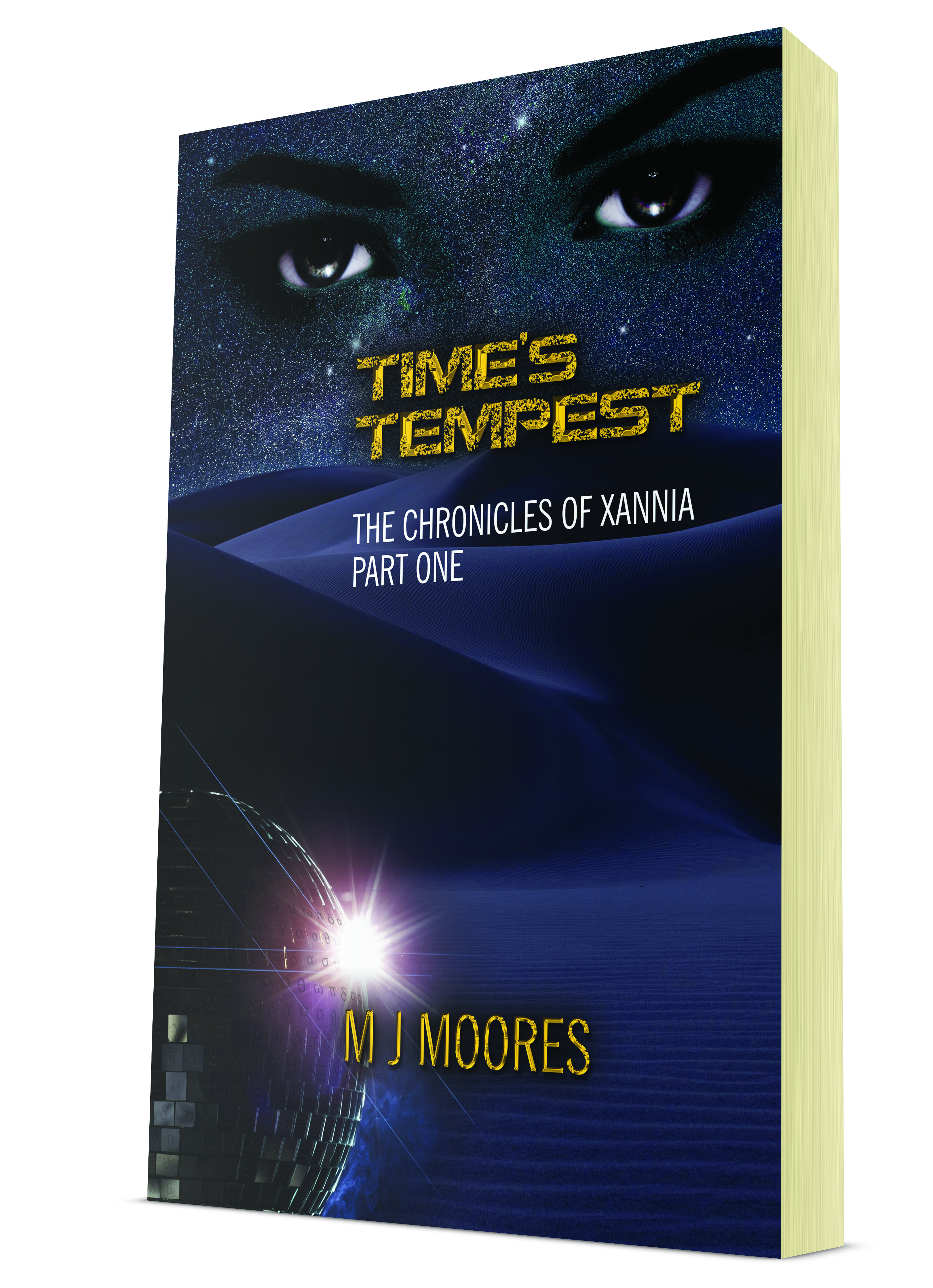
That being said, what inspired me to write my first published book Time’s Tempest: The Chronicles of Xannia was an incident that occurred while I was in my 1st year of community college – Y2K. At the time it seemed like half the planet was sure of certain doom when the digital calendars threatened to change to 1900 instead of 2000, and the other half of the planet either didn’t care or thought the reigning governments had things handled just fine. On New Year ’s Eve my then boyfriend, now husband, was in the first camp and I was in the second camp. As you well know, the world did not come to an end on January 1st, 2000. But that didn’t stop me from wondering “what if it had?” And that fueled the premise for Time’s Tempest.
How did you come up with the title?
Oh, it went through a variety of changes. It started as The Chronicles of Xanix without a specific book title. And then I realized that was only half of what I needed so I started playing around with different ideas for the main title. I liked the notion of alliteration and I knew it had to revolve around the consequences of time. Time’s Tempest emerged from a handful of scribbles and stuck with me for the rest of the week, so I adopted it and it’s been with me ever since. It wasn’t until an older gentleman I used to work for (after university – yeah, I went to community college for a year and then switched schools and majors) said that Xanix sounded a lot like Zantac… a medication for indigestion – I had to change that immediately and fell into the use of Xannia (but I said it out loud like zan-nay-ah… however, I never changed the spelling to reflect that and so now I have zan-knee-ah; both are cool).
Are experiences in the book based on someone you know or events in your own life?
Mainly the experiences are based on my own life but I wouldn’t necessarily refer to them as “events” since much of what the main character Taya goes through are internal struggles. Even when she has ‘earned’ respect she’s still treated like a child, belittled, and kept from showing her true potential. We learn throughout the story that even when she finally got beyond probationary status with her high-ranking title, employers still ignored her credentials and she would allow her frustrations to manifest verbally – or she’d go against her training (to keep her cool) and blow up at people. Her instability in her child hood led to her having few friends and being wary of having relationships beyond platonic work ones. Then, when someone finally recognizes her talent for what it is, she believes he’s a crack-pot trying to get innocent people killed – so she has to face her inner (and outer) demons when dealing with this guy in order to learn some very important life lessons. The fact that Time’s Tempest takes place on an alien world from ours doesn’t mean that these people don’t face the same emotional complications we do. In fact, I like science fiction and fantasy because it lulls you into a false sense of “but this could never really happen” and then by the time you’re done reading, you realize all the hidden truths you might never have looked at if someone had handed you a newspaper to read.
What was the hardest part of writing your book?
Getting the research right. In university I utilized my position as a junior librarian to scour books for information when I should have been working (but bending the rules never hurt me – or Taya for that matter – but taught me how to multi-task and balance my understanding of ethics in the workplace… yet another problem Taya faces in the book). The problem was that books could only get me so far. The bulk of the quest takes place in the Deserts – so I studied Earth’s deserts and learned a lot… but not enough. When I convinced screenplay editor and sci-fi writer Mark Arnold to read and critique Time’s Tempest for me, he helped bring the Desert Experience to life… he’d lived it – He’d been a soldier in the British Army and had done tours in the deserts of the Middle East. The insight he gave me really allowed for the book to shine.
Do you have anything specific you want to say to your readers?
Once you get to know me, you’ll realize that I don’t write science fiction. I write about internal journeys that are taken during external quests. I write adventure and the experience of understand self. Therefore, I don’t stick to any one genre. I have a New Adult story about a blind guy in university who’s thought to be a bomber; I have an Urban Fantasy that takes place in an alternate reality on Earth; I have ideas that look at the human experience and if you fall in love with Taya, Dezmind, and Zaith in Time’s Tempest then allow yourself the same opportunity to discover that passion and excitement in my other works too.
How long does it take you to write a book?
That’s another loaded question – LOL! A first draft generally takes me a few months. I don’t write full-time and whether I’m studying, teaching, or raising my young son I have to find time in my busy schedule to get my ideas on the page. The revision process for book one, Time’s Tempest, happened over ten years! Book two will be out in less than a year. The difference is that my learning curve isn’t as drastic as it was when I first started writing. My ability is now on par with other published authors and I’ve learned many of the tricks of the trade now. That helps speed things up a lot.
How did you choose the genre you write in?
As I mentioned earlier, I’m an eclectic writer who doesn’t stick to any one genre. What happens though is the story tells me what genre it wants to be – I don’t force it to go one way or another. For Time’s Tempest I’d never written sci-fi before and I’d only ever read a handful of books that could be classified as science fiction… but I watched a lot (and I do mean a lot) of action- (not horror) based sci-fi on TV and movies. While the potential for the end of the world could happen in any genre, sci-fi spoke to me because my husband gave me the idea for the book – he’s a sci-fi fanatic. I couldn’t separate the idea from the source. That’s how it works for all my books.
Do you suffer from writers block?
No. I know… I’m a rare case. I attribute it to the fact that I let ideas gestate before I write; I plan out my plots (outlines as guidelines, yes I’m a planner not a pantser); I do research to give me a plethora of ideas to turn to; and if I do get stumped on how to continue with an idea, I take a walk and allow myself to daydream various alternative paths until the right one grabs me – then I go home and keep writing. Hey, it works for me J
What was your favourite chapter to write?
In the first draft, my favourite chapter was the one where Taya scarifies herself, her life, for the people in her care. This was drama at its height and the emotional tension just fed my hand and words flew from my brain to the page. It was a lot of fun to write. However, over the years I’ve added several chapters to help flush out the story. The last draft I wrote (after Mark Arnold advised me) contained three new chapters. As much as I loved writing about the action sequences and consequences in the Deserts, I thoroughly enjoyed writing the chapter where Taya gives up her identity so soon after she’s finally come to terms with who she is. It’s a subtle thing but the interplay with Taya and Magda during this time of transition is staggering. It still moves me every time I read it.
What are you working on right now? Tell us your latest news.
In the past year, since I’ve devoted myself to being published, I’ve learned of NaNoWriMo. At first I thought it was ridiculous – a novel in a month? Who would bother? But with greater understanding of the idea, the goals of different writers, and my own need to get stories out there I changed my mind. So I will be participating this November with a new idea I mentioned earlier – the Urban Fantasy. It looks at the idea of not remembering what happened the night before at the ‘big party’ – that block of amnesia that you just can’t shake. Well, for Corvina Dray, a 19 year old girl with Leucism (no pigmentation to her skin & hair), she faces a whole host of not knowing. Waking up with blood on her walls she learns that she’s the new reaper in town and has to figure out what happened and how to reverse it. The problem is she’s leaving a trail of dead bodies in her wake that have the local cops suspicious, and the deeper she digs into ‘why’ the more she learns about family secrets and a parallel life led by the supernatural element.
I also have 30,000 words written of the first draft for book two of The Chronicles of Xannia: Cadence of Consequences with a goal of finishing that draft in January of 2015. My aim for book two is 90,000 – 100,000 words… just a bit less than book one.
Do you start with character or plot?
Generally plot but the idea of character is intrinsically connected to that plot… I mean, things have to happen to someone and if that someone isn’t interesting neither will the plot be. I like to get a sense of what the crux of a story is and then mold the right character to bring it to life.
It’s an evolving process where I get to learn about the character(s) as I write. Then, in draft two I focus on the people of the story and really learn about them and what it is they’re going through. That’s when the story gets its heart.
In your words, what defines a good story?
For me a good story takes me out of myself so that I’m able to critically look at those things I don’t readily search for in my own life – things that need to be addressed but that my conscious mind refuses to consider until the story paints the way for understanding.
Bio:
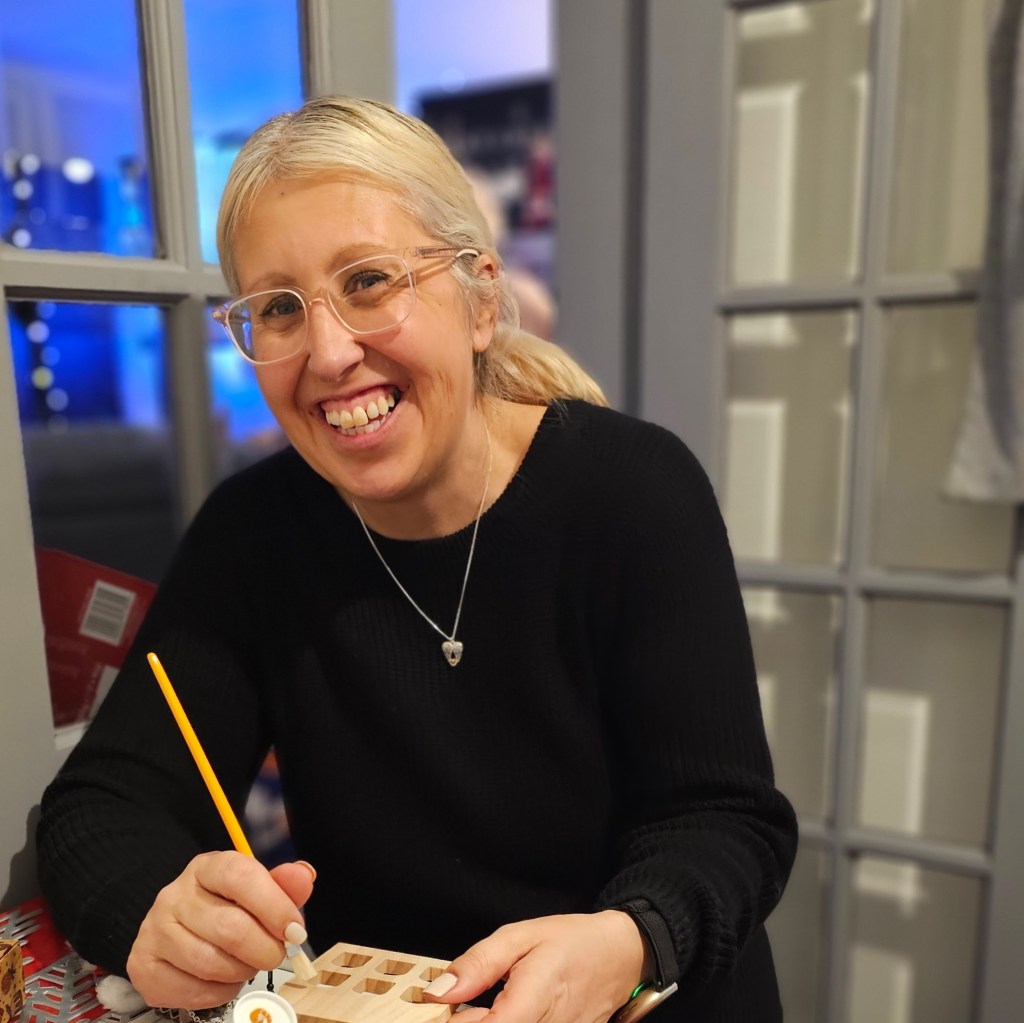
M.J. Moores began her career as an English teacher in Ontario, Canada. Her love of storytelling and passion for writing has writing has stayed with her since the age of nine. M. J. relishes tales of adventure and journeys of self-realization. She enjoys writing in a variety of genres but speculative fiction remains her all time favourite.
Connect With M.J. Online –
http://facebook.com/AuthorMJMoores
@AuthorMJMoores
http://juzdizrts.wordpress.com
http://www.gwlpublishing.co.uk/m-j-moores
Author Central: http://amazon.com/author/mjmoores


 Melissa Barker-Simpson
Leave a reply to M.J. Moores Cancel reply